
geis
pl. geasa
Gaelic lit. vow
alt. spell, taboo, troth, binding force
pronounced "gesh"
todo: Geese: Long form content [attention]
In the Ulster cycle of Irish mythology, the hero Cú Chulainn was a legendary warrior, wielder of the spear Gáe Bulg, slayer of thousands.
Like the biblical figure Samson1, whose great strength endured so long as his mane remained unshorn, whilst Cú Chulainn abides by his geis, he is gifted superhuman battle prowess.
But every hero has their weaknesses.
So long as Cú Chulainn abides by his geasa, he is gifted superhuman battle prowess - much like Samson1, whose strength endured only while his hair remained unshorn.
- The third paragraph dangles and mis-bridges
▎ Just as heroes of yore, one's reputation increases with promises kept. But forsaken oaths unmake heroes: break even a small promise and the value of each one thereafter diminishes.
Two problems:
- "Just as heroes of yore" is a dangling comparison — heroes of yore did what?
- The theme (reputation through kept promises) doesn't actually connect to the rest of the essay, which is about constraint birthing creativity. The next section opens "Why pick up a burden?" — that's a weight/limitation question, not a reputation question.
Option A — cut it entirely. The Cú Chulainn story already lands the geis-as-source-of-power point; let "Why pick up a burden?" pick that up directly.
Option B — replace with a bridge that leans into the actual thesis:
▎ Strange, then, that the binding is what made him strong. The constraint was the gift.
Cú Chulainn was bound by two2 geasa: to always accept food offered to him by a stranger, and to never consume dog3 meat. Like the biblical figure Samson1, whose great strength endured so long as his mane remained unshorn, whilst Cú Chulainn abides by his geis, he is gifted superhuman battle prowess. Alas, nary a hero without tribulation. Once a hag4 baits Cú Chulainn into enjoying roadside dog meat, he falls to ruin as Samson fell to Delilah's shears.
Just as heroes of yore, one's reputation increases with promises kept. But forsaken oaths unmake heroes: break even a small promise and the value of each one thereafter diminishes.
Blessing or Burden?
Consider the blind. Forced to rely on their other senses, those with impaired sight develop sharpened hearing, augmented touch, heightened perception. Neuroplasticity is a well-documented phenomenon that lets the brain overcompensate and adapt to the deficit.
In the same manner, artists constantly adapt to the constraints of their medium; limitation becomes identity. Nowhere is this clearer than in art, where each generation of creators has worked against technological, physical, or self-imposed walls, and in pushing back, found unique perspectives greater than they could have imagined.
Cinematography
Before artistic choice, limitations are often simply boundaries of technology. Movies started as zoetropes: static images on a rotating drum. By the early 1900s, theatres projected reels onto lenticular screens coated in silver or aluminium paint to enhance brightness. These vestiges of industry are why studios still refer to movies with the archaic terms "film", which refers to literal celluloid sheets, and "footage" because physical tape ribbon was measured in feet.
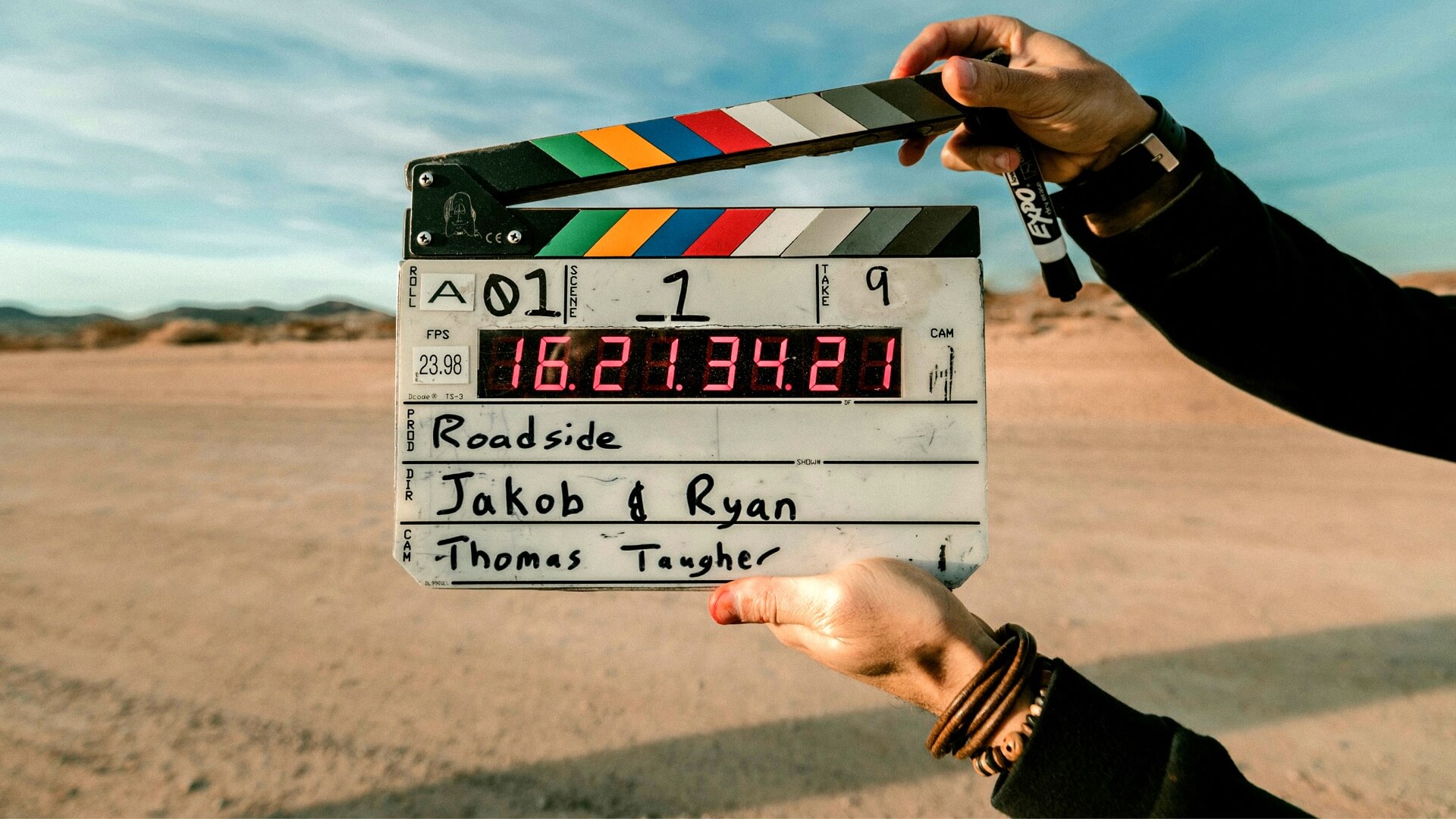 Clapperboard5
As technology evolved, so did its constraints. Colour was added in the early 1910s with Technicolor6. Sound arrived in the late 1920s, with Jazz Singer (1927) shipping alongside a separate record disc with audio, which by the 1930s came integrated and synchronised in magnetic tape along the side of the reel. The addition of sound compressed the picture area, changing film from a 4:3 ratio to the 1.37:1 "Academy"7 standard.
TODO SOUND OPTILCAL NOT MAG
Aspect ratios
Introduced in 1953, CinemaScope (widescreen 2.35:1, later adjusted to 2.39:1) uses an anamorphic lens to horizontally compress what the camera sees, gifting audiences a wide field of view that previously required stitching three separate cameras together. By shortening the width of film, CinemaScope allowed movies to feature stereo sound. However, with it came noticeable distortion when panning, reflected by directors of that era rarely moving the camera during scenes.
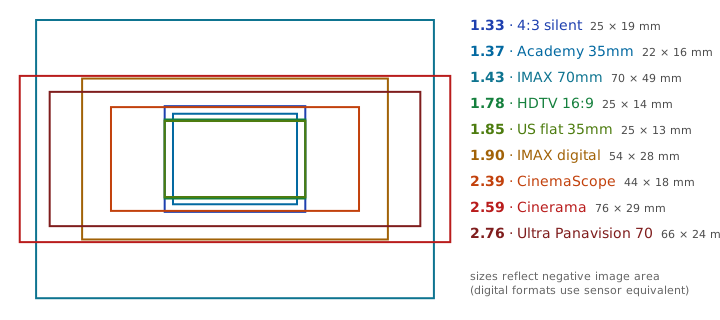 Scaled comparison of the nine common film formats. IMAX 70mm is... ginormous
Jurassic Park (1993), shot in 1.85:1 35mm8, astounded viewers with the scale and height of the dinosaurs. The dinos tower over the humans because the frame allows vertical dominance9, giving impressive scale to the animatronics. However, sometimes forcing framing to work can backfire. Zack Snyder's Justice League (2021) stifles its impressive action scenes in a 4:3 box, starving horizontal movement of room to breathe. While certain compositions are featured better (e.g. when Diana somersaults over Steppenwolf), action movies are shot in widescreen for a reason.
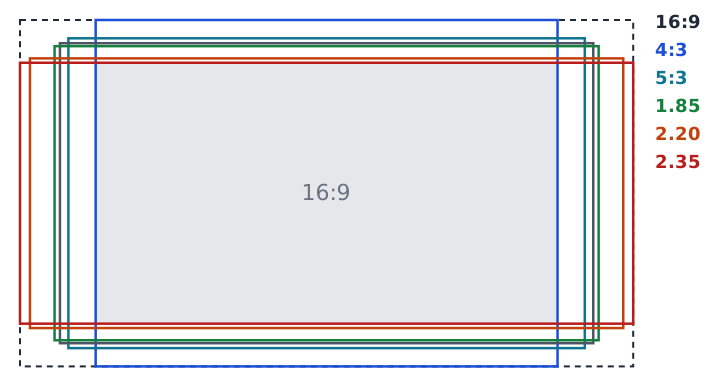 16:9 cleanly bounds the most common monitor aspect ratios
TODO https://www.widescreenmuseum.com/widescreen/cinemascope_oar.htm
Computer monitors tell a parallel story. Originally designed at 16:10 (the golden ratio), the SMPTE engineer Kerns Harrington Powers proposed a compromise between the myriad aspect ratios in 1984. He found that all the common ratios fit within an outer 1.78:1 rectangle and circumscribed an inner 1.78:1 rectangle. 1.78:1 (or 16:9) was the geometric mean between the tallest (4:3) and widest (2.4:1), and was aesthetically pleasing. Additionally, 16:9 panels are cheaper to manufacture (as you can get 10 panels for the price of 9), and so 16:9 won on economics and became the new standard. Today, some manufacturers (notably Apple and Lenovo) are returning to 16:10 for laptop screens in an effort to improve ergonomics.
Digital formats
Decades later, digital animation came with its own unique aesthetics based on the capabilities of computers of the time. Before computers, animations were manually crafted. The Hungarian movie Heroic Times (1983) was painted entirely on oil canvas; Ghibli films Grave of the Fireflies (1988) and Whisper of the Heart (1995) were made with traditional hand-drawn animation.
Aardman Animations specialised in claymation, using stop-motion with clay models that are manually repositioned between shots, giving Chicken Run (2000) an earthy aesthetic. Linklater's A Scanner Darkly (2006) used rotoscoping to emulate the dizzying, disorienting haze of drug addiction. The backlit glow in cel10 animation seen in Tron (1982) and Ghost in the Shell (1995) achieved a luminous quality that digital editing struggles to replicate.
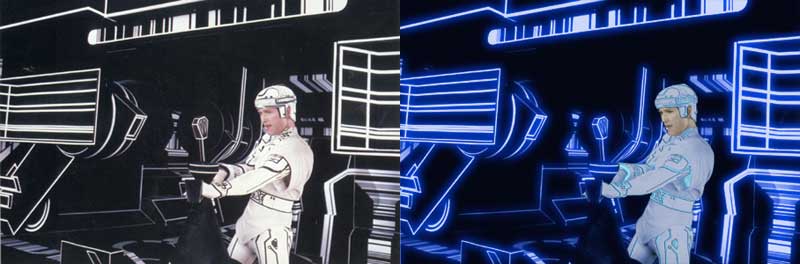 The glow effect in Tron shines a sheen seldom seen on the silver screen
Early Pixar is a case study in letting the constraint pick the subject.
Why was Pixar's first feature a film about toys? Because that was the limit of 1990s tech. Toy Story (1995) is full of hard plastic surfaces, simple geometries, and controlled lighting. Even then, individual frames took over a day11 to render.
It took six years for Pixar to tackle fur12, modeling the translucency and texture for millions of hairs on Sulley in Monsters, Inc. (2001). Finding Nemo (2003) took on water and caustics (refraction, reflection, attenuation). Each film was the company picking its next frontier, writing custom physics engines and shaders at the forefront of animation technology. Because Pixar and other studios embraced challenge and fought against their limits, they created class-defining movies still beloved today.
Practical effects
Before CGI (computer-generated imagery), filmmakers invented what they needed in the physical world, coming up with creative solutions to emulate sci-fi into real life.
During the production of Jaws (1975), Spielberg's mechanical shark frequently malfunctioned. Forced to cut its screen time to a minimum, Spielberg created a monster that was far more terrifying when it lurked unseen and lent an air of mystique and tension. The film's identity is artefact of a failed prop.
Half a century earlier, Buster Keaton grew famous for his stunts, like standing in the exact spot of an open attic window as a whole house facade fell around him in Steamboat Bill Jr. (1928). An inch off and it would have been the end of his career.
For his 2001: A Space Odyssey (1968), Kubrick built a custom 38-foot rotating set for the spaceship's centrifuge interior; the shot of Frank jogging around the full ring of the spacecraft was filmed in a single take, with the camera bolted to the rotating structure. The scene looks more real than most contemporary zero-gravity CGI shots because it was real.
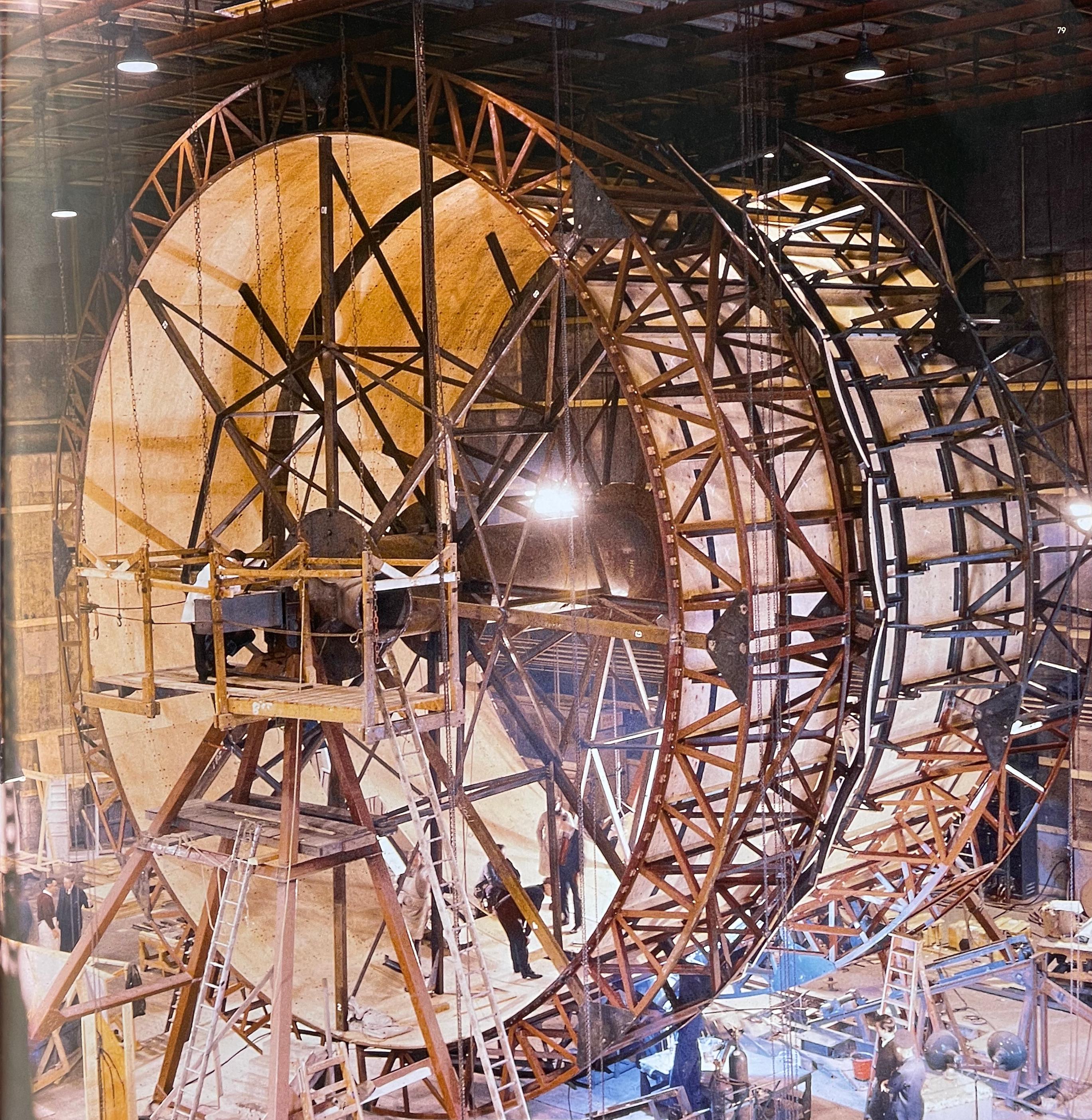 Dramatic times call for drastic measures
Twister (1996) used industrial-grade wind turbines to fling real props at its cast. The actors' terror on screen is genuine because they were genuinely afraid of being hit by debris; the production team dropped entire harvester combines from a helicopter.
Authenticity matters for realism.
Voluntary vows
Whatever diminishes constraint, diminishes strength. The more constraints one imposes, the more one frees one’s self of the chains that shackle the spirit.
- Igor Stravinsky, Poetics of Music in the Form of Six Lessons
Poems are a foundational example of constrained writing. Japanese haiku rely on strict prosody, adapted into English as a rigid 5-7-5 syllable13 structure. Shakespeare's sonnets strictly adhere to iambic pentameter and an ABAB-CDCD-EFEF-GG rhyme scheme with a volta (turn) at the end. Six-word stories are an extreme example of brevity ("For sale: baby shoes, never worn.").
Minimalist movements across various media have repeatedly proven that artificial boundaries often birth the best art.
In 1969, Georges Perec finished his novel La Disparition, a 300-page lipogram which never uses the letter E, the most common letter in French (and English). Gilbert Adair produced its English translation, the 1994 A Void, under the same rule. Perec was a member of the OuLiPo, a collective of writers and mathematicians devoted to constrained writing techniques.
In 1995, directors Vinterberg and von Trier created the Dogme 95 "Vows of Chastity". They swore away artificial lighting, non-diegetic sound, optical filters, and mandated using only handheld cameras. Their manifesto is a geis in its most literal form: a voluntary, self-imposed binding. Vinterberg and von Trier believed that stripping away modern conveniences would force the remaining elements (acting and story) to overcompensate into greatness.
Blessing in disguise
Filmmakers and writers don't create masterpieces in spite of their limitations; masterpieces are made because of them. Under the tightest bounds, you force yourself to become better. Constraint is the mother of innovation.
TODO Twitter is a shell of itself, a husk, imperfect clone seeking the wit which stemmed from the 140ch count
To take advantage of this, musician Brian Eno and artist Peter Schmidt created the Oblique Strategies deck in 1975. The cards offer random, disruptive instructions (e.g. "Use an old idea," "Reverse," or "Abandon normal instruments") designed to break creative blocks, functioning as a portable geis generator.
So the next time you find yourself staring blankly at a canvas or a blinking cursor, consider imposing a geis of your own. Unlike the ancient hero Cú Chulainn, whose geasa were vows that destroyed him, you, the artist, can thrive precisely because you choose the terms of your own binding.
Pick up a burden, and see how strong you become carrying it.
ky
https://xcancel.com/BoundaryBreak/status/1949170064994824327
Telltale WALKING DEAD DUPLICATE ROOM BECAUSE REFLECTIONS
Footnotes
-
As a Nazirite (Hebrew lit. consecrated), the judge Samson voluntarily took three vows upon himself: to abstain from wine and vinegar, to refrain from cutting the hair upon his head, and to remain pure by avoiding contact with corpses or graves. ↩ ↩2 ↩3
-
Depending on the story, Cú Chulainn is beholden to different geasa at various points in his journey. A geis is almost always a Chekhov's gun for some negative consequence later. ↩
-
Born Sétanta, he becomes the "hound" (cú) of Culann. The wording of his geis states that he "cannot eat his own kind," and in Ireland there is a strong general taboo against refusing hospitality. ↩
-
https://rentry.co/former_nct_member_kim_doyoung_has_died_of_old_age ↩
-
The clapperboard, still used by producers today, exists skeuomorphically like a floppy disk save button. It was invented to allow filmmakers to synchronise the audio with the film (as the audio would spike when the "clap" happened) and doubles as a slate to jot down scene details for later editing. ↩
-
Wizard of Oz (1939) is notable in being the first feature film to use colour. That's why the opening shots of the movie are in black and white: once Dorothy leaves Kansas and arrives in Oz, vibrant colours wash over the screen, astonishing audiences au fait with monochrome. Imagine the shock of seeing movies in colour for the first time! ↩
-
Named for the Academy of Motion Picture Arts and Sciences, the group that awards the Oscars. ↩
-
35mm is the "standard" widescreen format. In 1967, IMAX was created to offer the largest image surface area film, with higher resolution and surround sound. IMAX comes in two formats: "wide" 1.90:1 for digital laser and 1.43:1 for 70mm film. Always try to watch in IMAX 70mm if you can! Laser cuts out nearly 30% of the screen. ↩
-
Celluloid sheets. Not to be confused with involuntary celibacy. ↩
-
Video game designers face similar processing walls, resulting in incredibly innovative workarounds. In Fallout 3 (2008), the subway system is actually a hidden NPC with a massive train car for a head who runs underneath the player. Despite being made long before advanced machine learning, F.E.A.R. (2005) presented one of the most well-built enemy coordination systems in first-person shooters. Jeff Orkin, its designer, explained that the game secretly used a finite state machine with custom "planning" algorithms to give the impression that all the AI enemies acted in unison. ↩
-
Even today, one of the toughest hardware stress-testing benchmarks is FurMark, which tests the ability of a graphics card to render a torus of fur. FurMark is sometimes referred to as a "GPU burner". ↩
-
Japanese metre counts sound in "on" / "mora" units which measure rhythmic beats rather than exact English syllables. But the underlying idea is the same: by limiting the poem's length, each word carries greater weight. ↩