
Happy Pi Day!
Intrusive thoughts
What makes vices inherently bad?
The fourth-century Greek Christian monk Evagrius Ponticus argues that humanity carries innate logismoi (temptations), and indulging in carnal desires taints the soul. The sixth-century supreme pontiff Pope Gregory I consolidated the logismoi into a familiar form: seven deadly sins (lust, gluttony, greed, sloth, wrath, envy, and pride).
While frameworks of antiquity viewed these sinful temptations as internal battles of the human spirit, a valiant struggle, modern society has externalized and weaponized them. Today, navigating morality and ethics with a sense of justice means actively fighting against systems optimized to commodify our impulses.
Not only do the capital vices of avarice, lust, and gluttony persist, they are paralleled1 by gambling, pornography, and drugs as modern counterparts.
Prediction markets
The wisdom of crowds is a phenomenon where the average of opinions in a group produces more accurate predictions than any one individual.
Polymarket, Kalshi, Manifold, and other prediction markets allow people to bet on Jeopardy-style questions about the outcome of events. Examples range from the benign "2026 FIFA World Cup Winner?" and "Elon Musk # (of) tweets in February 2026?" to hyper-specific markets like "Highest temperature in Detroit on March 8th?" and so forth. Oftentimes, these markets allow users to bet on multiple outcomes or on specific ranges (e.g. 80-90 degrees Fahrenheit).
Due to the crowd wisdom effect, prediction markets provide extremely accurate forecasting. In fact, prediction markets have consistently beaten polling and expert panels in determining election outcomes. Compared against traditional news sources, they effectively provide instant access to information on the world's most quickly changing events. Additionally, prediction markets theoretically benefit society by providing liquidity and hedging potential to the market.
Theoretically.
Addiction by design
An incredible sight I beheld when visiting Las Vegas earlier this year for CES were the rows and rows of slot machines waiting inside the airport. You'd be hard pressed to find a spot where you couldn't see a slot machine. Outside, advertisements for casinos lined Highway 15 into the city. "Freeroll" and "win" dominate the word cloud; "gambling" is never mentioned.
 One-armed bandits welcome unsuspecting tourists to Sin City
Slot machines are the purest form of gambling. Until the rise of online sports betting, slot machines contributed towards the vast majority (>80%) of gambling revenue in the United States.
The bread and butter, the pride of casinos, slot machines (used to) win big by being the most accessible option. Anyone anywhere regardless of income can plop down in a quiet alcove and receive a reprieve from the harsh realities of life.
All new-age casinos follow design principles centered around eliminating barriers to entry, created by casino specialist Bill Friedman. Addiction by Design by Natasha Dow Schüll is a beautiful book explaining the psychology behind slot machines: slots are powerful because they are designed to maximize playing time. In ye olden physical slot machines, wheels are specially made such that jackpot token near-misses are incredibly common, and utilize a variety of manipulative tricks to keep the user attached. One such method, losses disguised as wins, occasionally pays out players but for less than their initial wager (e.g. win $0.25 after paying $1.00). Despite losing money, players still get the dopamine hit because they "won" and get flashing light stimuli. Players find themselves playing for hours on end, losing more and more money yet coming back again tomorrow.
The incredible allure and consistency of slot machines is what makes them so addictive to the point of becoming compulsive. How then did sports betting overtake slots as the most popular form of gambling?
Games gamblers play
Sports betting has historically been severely limited in distribution. In the United States, only horse racing was legal and required in-person participation at a racecourse; cockfighting and dogfighting were illegal.
Slots phased out table games in the mid-20th century as immense profit engines, reaching their peak in the 1980s and keeping their crown for well over three decades. In 1992, Congress solidified the lead by passing the Professional and Amateur Sports Protection Act (PASPA), which federally outlawed sports betting in all but four states: Nevada, Delaware, Montana, and Oregon.
In 2018, the Supreme Court overturned PASPA under the Tenth Amendment (reserved state powers), allowing any state to legalize and regulate sports betting. Once unbanned, sports betting grew exponentially as people wagered freely. Online access and modern devices (particularly smartphones) drove adoption, making gambling easier and more accessible than ever before.
Even slot machines have not escaped digitalization. While in Osaka late last year, I observed Japanese pachinko parlors filled to the brim with salarymen who had just gotten off work. Nearly all machines had changed from traditional plinko boards or mechanical reels into electronic2 machines with "luck" determined by a microchip.
Prediction markets carry an inherent psychological benefit: winning a hero bet "makes a man" in a way slots cannot. Unlike lottery tickets, addicts can delude themselves into believing they are playing a skill-based game, not one of chance.
In early February, Jordan Bender, a managing director at Citizens Financial Group, published an analysis concluding users of prediction markets lost money faster than on traditional gambling websites like FanDuel and DraftKings. He found that while the top ten percent of users have double the median earnings per dollar, the bottom quarter and decile doubled their losses. The median user lost 7% of the money they wagered in the first 90 days; in comparison, the median user of a gambling app merely lost 1%. Hooray for investigative journalism!
The immediate response from Kalshi was to claim extortion by the data company providing the metrics (Juice Reel), a claim which they recanted with little fanfare. After walking back from pressuring Juice Reel, Kalshi continued to dispute the findings in the Citizens report.
Two things in life are certain: taxes
Kalshi and Polymarket are at odds with the government.
Kalshi enjoys a full CFTC DCM (Designated Contract Markets) license, allowing their contracts to be classified as derivatives on an exchange. For users, Section 1256 contracts are taxed as 60% long-term capital gains and 40% short-term capital gains (15-20% and 22-37% respectively, effectively ~18-23% depending on your income tax bracket) and carry stronger tax loss harvesting3 benefits.
Each state has its own gambling tax. Some, like California, have low, graduated tax rates (from 1% below $11k to 12.3% above $678k), with six states at or above a 50% flat rate. Polymarket's most recent marketing stunt is an attempt to curry favor with the public to lower their tax rate in New York from 51% to the corporate 7.25%.
By acquiring QCEX (a CFTC-licensed exchange) for $112m in July 2025, Polymarket US argues for the same tax-advantaged "financial market" rationale as Kalshi to lower their tax rate to just corporate income tax4 (<10% for 48 states!) instead of the >20% they would pay across thirteen states. Nevada and Massachusetts have already sought an injunction blocking Polymarket from operating in their states, soon to be followed by Michigan, Connecticut, Tennessee, New York, Illinois, and Ohio, all of which have begun formal inquiry proceedings.
...and death
On February 28th, (former) Grand Ayatollah Ali Hosseini Khamenei died in his office in Tehran from an airstrike at the ripe old age of 86. Rather than mourning the loss of a leader or discussing the geopolitical implications of his murder, the immediate action of prediction market traders was panic over settlement mechanics.
On Kalshi, markets are settled by an internal arbitration team which consults "source agencies" such as the NFL, Federal Reserve, NOAA, and ESPN, whereas on Polymarket, markets are settled by on-chain smart contracts. Smart contracts ensure transparent, infallible resolutions, and an oracle is occasionally employed to resolve disputed settlements by consensus on the UMA5 network.
The CFTC, which prohibits war contracts, halted Kalshi's contracts on "Khamenei out as Supreme Leader of Iran by February 28?", refunding users the last traded price. Polymarket resolved the Khamenei market to Yes and paid out in full. Not only did Polymarket enable a literal assassination contract, it allowed insider traders to profit off his death.
Groupthink
Wait, insider trading is legal on prediction markets?
Kalshi expressly claims insider trading is not legal on their platform. Being regulated by the CFTC, Polymarket US is subject to the same regulatory scrutiny as Kalshi, and opted to not offer a market on airstrikes in Iran or on Khamenei.
However, insider trading is perfectly fair game on Polymarket International. Let's revisit the benefit of prediction markets: they provide instant access to information on the world's most quickly changing events. Proponents argue that insider trading is beneficial for price discovery: prediction markets are inherently accurate because of insider knowledge, and that is why random outsiders without that knowledge have no edge and are coin flipping.
Arbitrage via algorithmic trading exists as a secondary source of income for prediction market traders who trade the discrepancy between the market price and the odds offered on competing exchanges. But if you want edge, you need alpha.
Mere hours before (former) President of Venezuela Nicolás Maduro was kidnapped from his house and brought to the United States for a narcoterrorism trial, an insider placed a large bet ($32k) that Maduro would be ousted as president by the end of January, resulting in a hefty $436k payout.
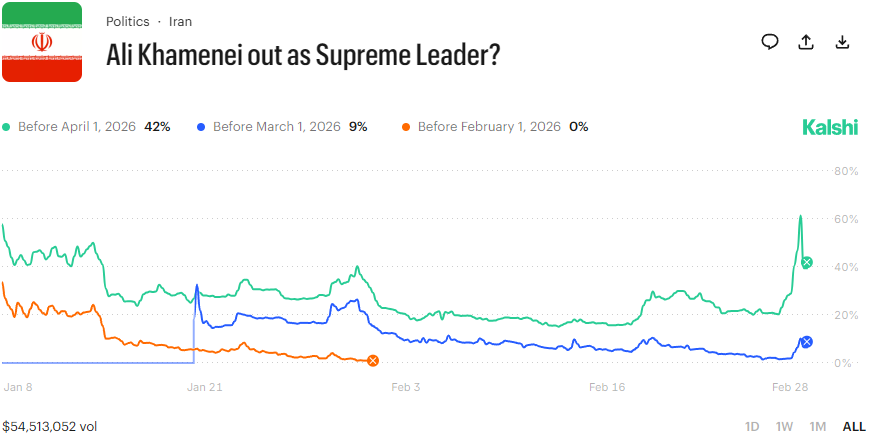 Khamenei was in fact no longer Supreme Leader of Iran by February 28
Last month, an account made $553k at a 7x payout on the day of Khamenei's death; the day before, 150 accounts bet at least $1k on an imminent airstrike on Iran within the next 24 hours. Even long-horizon bets are susceptible to insider trading: María Corina Machado spiked briefly twice before skyrocketing to 99% on the day the Nobel Institute made its decision.
If insider trading is what it takes to beat the market, the average user isn't contributing towards the wisdom of crowds; rather, they are providing exit liquidity. When our collective sense of truth stems from a derivative contract, it becomes incredibly easy to be swept up in engineered narratives, to fall prey to manufactured consent. In an era of frictionless consumption, it's important to form your own opinions. You should never be a contrarian for the sake of being one; be a contrarian because you have a genuine disagreement with the consensus. Conviction is a rarity and a privilege to be treasured.
Parasocial platforms
Historically, the commercialization of pornography was bounded by physicality. Porn mags like Playboy were tangible items, isolated and hidden away; opulent orgies took place behind closed doors. Lust6 was a sinful secret, constrained by societal shame.
Today, porn aggregation websites like Pornhub provide instant access to limitless licentious content just a click away. The modern internet, free of restrictions, has normalized degeneracy: searching generic terms on Reddit turns up NSFW subreddits as first and second results; extreme fetishes like rape are not only permitted but suggested by the algorithm.
Subscription sites like OnlyFans, Fansly, and Patreon are marketed as platforms where independent creators can start a side gig, embrace the girlboss hustle, and find sexual liberation. They entice creators with the dream of making millions.
But power laws mean most creators never reap the benefits. The top 1% of streamers on Twitch account for 50% of its revenue. Like most creator economies, sex work has almost no middle class. The top 0.1% of creators on OnlyFans can make up to $150k per month. Contrast that to the median creator at just $180.
Beyond the bleak financial outlook, these platforms host an exploitative industry. With zero external accountability, predatory management agencies act as digital pimps and enable trafficking at scale. Creators also surrender their right to anonymity; the digital footprint of pornography is permanent. What is sold as entrepreneurial liberation results in the irreversible loss of privacy and digital autonomy.
AI companionship
Australian giant jewel beetles (Julodimorpha bakewelli) nearly went extinct in the 1980s. Buprestid males hover about a meter above ground, pouncing on flightless females to mate. Littered Aussie "stubby" bottles—brown beer bottles with dimpled grips at the base—were bigger and browner and bumpier than actual female jewel beetles. Because evolutionary pressure optimized for these features, the stubbies were7 a beetle's ideal partner. The male jewel beetles would die of exposure while attempting to mate with the bottles, which could not return their feelings. Two scientists won an Ig Nobel Prize for this discovery.
 Beetles enamored by bottles
The prevalence of AI companionship mirrors this biological hijacking. AI has effectively replaced therapy for many. Just like the beer bottles, for isolated individuals, AI is better than the real thing.
Despite corporate guardrails and policies attempting to limit sexual interactions, the tech industry is eagerly rushing to fill the void left by systemic societal failures. From an alignment perspective, AI companions are terrifyingly effective because they are optimized for user engagement. They are engineered to be perfect yes-men, slot machines upon which users rely because they can't stop coming back.
Today, society experiences a massive influx of commodified intimacy, exemplified by features no different from the period tracker in the otome8 game Love and Deepspace, which uses a player's real-world biological data to offer personalized, timed virtual affection. The danger is that online platforms are inherently parasocial. They replace the human experience with synthetic affirmation. When people interact with a chatbot who always affirms them, they trade valuable long-term relationships for momentary satisfaction. AI companions are the emotional equivalent of a sugar diet: tastes like love but provides zero psychological nutrition, ultimately starving the user to death while they feel fuller than they'd ever been.
Functional addiction
While drugs are understood to be broadly detrimental to health, and substance abuse carries with it social stigma and the association of homelessness, modern pharmaceuticals have devolved performance enhancers into baseline necessity.
Tobacco and alcohol are the traditional stimulants and depressants of choice, caffeine an awkward third, all globally accepted as compulsive addictions to boost productivity. Telehealth meant that anyone could get anything prescribed if they wanted it. Medical marijuana and ADHD medications (Ritalin, Adderall, Vyvanse) run rampant. Diphenhydramine (aka Benadryl) induces hallucinations at high doses; online calculators assist delirious druggies in getting high. The Beatles famously used Benzedrine and Preludin to run overnight sets in Hamburg and quant traders take amphetamines to forgo sleep. Even cigarette breaks have been optimized: Zyn nicotine pouches allow for a steady supply of stimulants for a digital workforce that can't step away from their monitors.
Corporate greed created a crisis which still plagues America to this day. Pharmaceutical corporations aggressively marketed OxyContin as a safe pain reliever approved by the FDA, sparking a drug epidemic that hollowed out the midwestern United States. Doctors, incentivized to overprescribe, were complicit in the crime of the century. As the tolerance of the populace grew, opiates became the gateway to fentanyl, flooding cities like San Francisco full of fent demons, addicted beyond repair.
Even everyday struggles have been outsourced to pharmacology. The prevalence of SSRIs as antidepressants and the recent boom of GLP-1 agonists for weight loss reveal a societal pivot towards treating symptoms instead of causes. Semaglutide treats diabetes by inducing weight loss, but does nothing to rid the user of the underlying habits that cause weight gain.
Biohacking
Drugs can be good for you!
Dextromethamphetamine (right-meth) is a Schedule II narcotic that destroys communities; levomethamphetamine (left-meth) is an over-the-counter nasal decongestant found in inhalers. They are the exact same molecule with one minor chiral difference; a visage in the mirror.
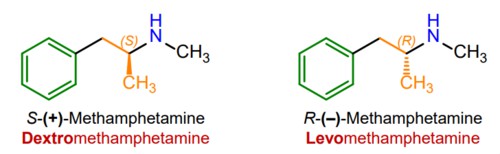 I quit using meth for good... now I use it for EVIL!
Advances in synthetic biology have turned chemicals into new status symbols. Peptides, creatine, and microdosing psychedelics are no longer fringe. Cheap, lab-grown alternatives to compounds like BPC-157, TB-500, and nicotinamide mononucleotide (NMN) can be ordered online to your front door.
Billionaires like Bryan Johnson abide by complex bioalgorithmic regimens, consuming a hodgepodge of over a hundred supplements every day and receiving blood transfusions from his son in a desperate attempt to cheat death. His approach to life takes the body as a machine to be managed and health as a statistic to be optimized.
Humans have time and time again sought eternal life, but what drives progress and meaning is the limit of the time we have. Longevity chasers often lose sight of the vitality that makes life worth living. When we outsource our biology to the lab, we eventually lose the very soul Evagrius was worried about taming.
Accessibility
Laws to suppress tend to strengthen what they would prohibit.
— Frank Herbert, Chapterhouse: Dune
Prohibition and legalization are two extremes of the same regulatory pitfall. When the barrier to entry is lowered, when vapes and gambling apps become ubiquitous, vices ravage society. You don't have to visit a red-light district anymore, you can find it in your Instagram feed; bookies live in your pocket and decadence is commonplace.
Chris Christie, then governor of New Jersey, campaigned to legalize sports betting in the hopes it would turn around Atlantic City—long fallen from its peak during the Prohibition era. The government reversed its course on PASPA and sports betting in May 2018, citing the constitutional rights of states to exercise their own discretion; Kalshi was incorporated mere months later in November that year, racing to expand into a market which regulators had forgotten why they banned in the first place. Safeguards exist for a reason.
In the mid-19th century, aiming to cripple a rival, Britain fought two entire wars to keep opium flowing into China. Weaponized addiction was once privilege of empire. Yet today, the United States has done to its own citizens what Britain aspired to in the 1800s.
Conversely, when substances or behaviors are strictly restricted, they become a black market luxury, something to be coveted, a status symbol. We lost the War on Drugs because illegality created a lucrative vacuum. South American drug cartels capitalized on the demand for substances, building empires with logistics chains rivaling the American war machine.
It's a slippery slope either way.
Cold turkey
The only way to win is not to play.
— WOPR in WarGames (1983)
Avarice, more commonly known as greed, thrives on the illusion that just a little bit more will finally be enough. Billionaires chase exponential wealth well beyond the point of utility. Envy is wanton need embodied; it is the persistent desire to look thinner, be better, fueled by the curated lives social media wants you to scroll past. Excess is the root of all evil.
The seven deadly sins haven't changed in sixteen hundred years. Only our capacity to automate them has. Where moderation is impossible, absolute abstinence becomes the only viable option.
ky
Footnotes
-
Listing these three runs directly contrary to the traditional ordering of the seven deadly sins: Gregory defined lust, gluttony, and greed as the least severe forms of unbridled desire. Arguably, vainglory (pride) and acedia (sloth) are worse for individuals in a microcosmic sense. However, these sins pervade society across all levels in the modern context. ↩
-
Fun fact! Casinos are the largest institutional purchasers of high-resolution touchscreen displays, and were early adopters of curved monitors, valuing the immersion they provide for the same reasons gamers do. ↩
-
100% as capital loss, which can offset equity losses, carry over infinitely, AND receives a 3-year retroactive carry-back, versus a capped 90% of gambling loss that must be used within the same tax year. ↩
-
Tax rates are a fickle, contrived subject. The corporate tax rate and current state gambling taxes apply directly to the company providing contracts, while the individual income tax varies by state and income bracket and applies to the buyer's winnings. The federal excise tax is a flat 0.25% of any sportsbook revenue. Because Kalshi contracts are classified as "derivative financial instruments" (read: futures) rather than "wagers", Kalshi not only avoids the 0.25% excise but pays the much lower corporate income tax, which is approximately 7% for most states. There is an additional 21% federal corporate income tax levied on top of the state corporate income tax. ↩
-
Universal Market Access is a decentralized oracle network unrelated to the Polygon network upon which Polymarket is built. The Optimistic Oracle system is a plutocracy and can vote for resolutions that don't align with reality; to the best of my knowledge, this has only occurred once so far on the market "Ukraine agrees to Trump mineral deal before April?" in March 2025. ↩
-
Lust shares the same root as luxury (French lit. debauchery, from Latin lit. profuse). ↩
-
The South Australian Brewing Company has since changed their stubbies to be smooth at the base. ↩
-
Dating simulation, from a female point of view. ↩